.png?width=1280&height=720&name=custom_thumbnail_large%20(10).png)
Rodent Prevention
Fall Rodent Prevention: What to Check Before Mice Move In

Pest Exit
Fall rodent problems do not usually begin the night you hear scratching in a wall.
They begin earlier.
As temperatures start changing, mice and other rodents begin looking for reliable sources of food, shelter, and protection. Homes, rental properties, garages, offices, storage areas, and other structures can provide exactly what they are looking for.
That does not mean every property in Winchester suddenly has a rodent problem when September arrives.
It means this is a smart time to look at your property before there is one.
At Pest Exit, we believe prevention starts with information. We inspect carefully, explain what we find, and recommend only what makes sense for the property.
No scare tactics. No unnecessary services. Just honest pest protection that works.
Rodent Problems Usually Start Before You Hear Them
When homeowners think about mice, they often think about obvious signs: scratching sounds, droppings, chewed materials, disturbed food packages, or a mouse suddenly running across the floor.
Those signs get attention because they're hard to ignore.
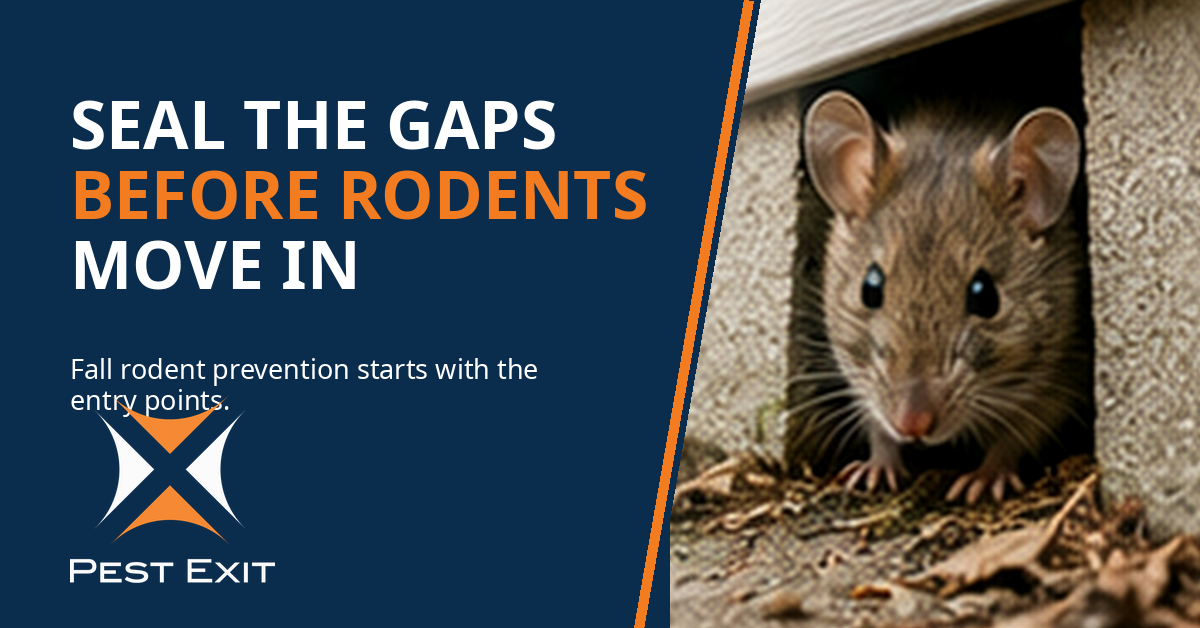
But before any of those things can happen, a rodent first has to find a way inside.
That makes the exterior of the property one of the most important places to begin when thinking about fall rodent prevention.
Rodents are looking for opportunities. Openings around structural transitions, utility lines, garage areas, crawlspace access, damaged materials, doors, vents, or other vulnerable points can potentially provide access.
The goal of a fall inspection is to identify those opportunities before they turn into repeat activity.
Start With the Garage
Garages deserve special attention in the fall.
They're used constantly, doors open and close throughout the day, and they often contain storage, pet food, bird seed, trash, or other materials rodents may find attractive.
Look around garage door edges and seals, exterior doors, areas where walls meet foundations, corners hidden behind stored items, utility lines entering the garage, and areas where visible gaps or damaged materials have developed.
You don't need to assume every opening means rodents are getting inside. The purpose is to identify anything that deserves a closer look before the weather becomes colder.
Check the Foundation and Crawlspace
Foundation areas are another logical place to inspect.
Over time, materials change. Gaps develop. Repairs are made. Utility systems are added. Crawlspace covers become damaged. Landscaping can also hide areas that homeowners rarely inspect closely.
Walk around your home or building and pay attention to transitions between materials.
If you have a crawlspace, make sure access points appear secure and obvious damage hasn't developed.
Again, this isn't about trying to diagnose a rodent problem yourself. It's about noticing conditions worth evaluating.
A professional inspection can determine whether an opening actually creates a concern and what, if anything, needs to be done.
Don't Forget Utility Penetrations
Pipes, cables, vents, HVAC lines, electrical components, and other utilities frequently pass through the exterior of a structure.
Those transitions are necessary. They're also worth checking.
Materials around them may deteriorate, shift, or leave openings over time.
A small exterior concern may not look important from several feet away, which is one reason homeowners often don't notice these areas until a pest issue develops.
Part of good rodent prevention is simply paying attention to places where the structure has openings by design.
Rodents Need More Than Access
Finding possible entry points is important, but access is only one part of the picture.
Rodents are generally looking for three basic things: food, shelter, and access.
That means fall preparation should include more than simply looking for gaps.
Consider where food is stored. Pet food, bird seed, trash, animal feed, or other materials can become attractive if they're easily accessible.
Consider shelter. Garages, storage rooms, basements, sheds, crawlspaces, utility areas, and other low-traffic spaces provide places where activity can go unnoticed.
And then consider access. A property becomes much more inviting when food or shelter exists alongside an easy way in.
Understanding the combination helps create a more useful prevention strategy.
Storage Areas Can Become Quiet Trouble Spots
Rodents prefer locations where they can remain undisturbed.
That makes storage areas especially important.
Garages, basements, utility rooms, sheds, warehouses, closets, and commercial storage spaces can go long periods without much activity.
Boxes and stored materials may also make it harder to see what's happening around walls and floors.
As fall approaches, consider doing a quick visual review. Look around the perimeter of the space instead of only the center. Notice disturbed materials. Check areas behind storage when practical.
And if something doesn't look right, have it evaluated rather than guessing.
What Should Property Managers Check Before Complaints Begin?
For property managers, fall rodent prevention isn't only a pest-control issue. It's an operational issue.
One tenant complaint can become several phone calls, scheduling problems, questions from owners, documentation needs, and additional follow-up if the source isn't clear.
September provides an opportunity to get ahead of that cycle.
Properties approaching turnover, units with prior rodent history, older buildings, storage areas, garages, basements, and utility spaces are all reasonable places to focus.
The goal isn't to inspect every square inch of every property simply because fall is approaching. It's to identify higher-risk locations and address known vulnerabilities before tenants are the ones reporting them.
Reliable prevention protects more than the building. It protects the schedule.
Commercial Properties Have Different Risks
For offices and other commercial environments, a rodent sighting can affect more than comfort.
Employees notice it. Customers may notice it. Management suddenly has an urgent problem that must be addressed without disrupting operations.
That's why predictable pest management matters.
Breakrooms, storage areas, utility spaces, exterior doors, trash areas, loading areas, and building transitions may deserve attention as seasons change.
A professional inspection can help identify vulnerabilities while there's still time to address them calmly.
For a business, the best pest problem is often the one employees and customers never knew was prevented.
What Does Rodent Exclusion Mean?
Rodent exclusion is about addressing ways rodents can enter a structure.
Treatment addresses pest activity. Exclusion addresses access.
Depending on the property and the situation, a complete solution may involve one, the other, or both.
That distinction matters. If rodents are removed but the access problem remains unchanged, the property may still be vulnerable to future activity.
At the same time, not every visible opening automatically requires a major exclusion project.
That's why inspection comes first.
Pest Exit evaluates the situation, explains what we see, and recommends what the property actually needs.
If a simple correction makes sense, we'll tell you. If exclusion is warranted, we'll explain why. And if something doesn't require action, we'll tell you that too.
What About Recurring Pest Protection?
Recurring pest protection can be valuable for properties with continued seasonal pressure, repeated pest activity, or conditions that benefit from ongoing monitoring.
But it should never feel like an automatic upsell.
Not every rodent concern means a property needs a maintenance plan.
The right approach depends on the property, previous activity, environmental conditions, and what the customer wants to accomplish.
For some homeowners, routine monitoring creates peace of mind. For property managers, predictable service can reduce tenant complaints and emergency calls. For businesses, regular service can help protect client-facing areas and reduce disruption.
The important part is choosing the service because it fits the situation — not because somebody pressured you into it.
September Is the Time to Get Ahead of the Pattern
Once temperatures drop more consistently, rodent calls become more urgent.
By then, customers may already be hearing activity or finding evidence indoors.
September gives you a different opportunity. You can evaluate your property before the problem becomes urgent.
Check the garage. Look around the foundation. Review crawlspaces and utility areas. Take another look at storage spaces. Think about food sources.
And if you see something you're unsure about, ask someone who knows what to look for.
You don't need to diagnose the problem yourself. You just need clarity.
Schedule a Fall Rodent Inspection in Winchester, VA
If you want to know whether your home, rental property, or business has vulnerabilities that deserve attention before fall rodent activity increases, Pest Exit can help.
We inspect carefully. We explain clearly. We recommend only what's needed. And we stand behind our work.
No scare tactics. No unnecessary services. Just honest pest protection that works.
Call Pest Exit at 540-336-7363 or visit pest-exit.com to schedule your fall rodent inspection.